5 Essential Severe Weather Protocols for Farmers
5 Essential Severe Weather Protocols for Farmers
For agricultural professionals, a massive severe weather system isn't just a threat to personal safety—it's an existential threat to their livelihood. A single massive supercell or flash flood can wipe out a year's profit in a matter of minutes.
Mitigating agricultural damage requires massive logistical foresight. Here are five non-negotiable protocols every commercial farmer must implement before the storm season hits.
1. Secure Livestock in Reinforced Shelters
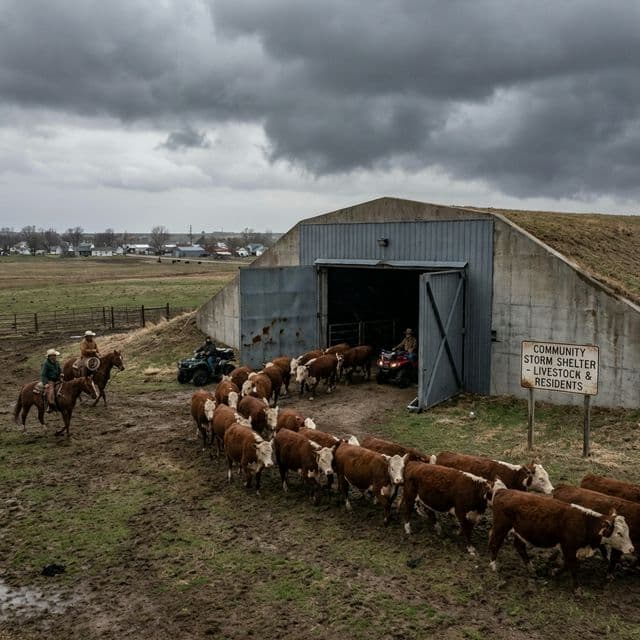
Cattle and other livestock are incredibly vulnerable to flying debris, hail, and the sheer panic induced by extreme weather events.
- The Action: Herd all vulnerable livestock into designated, reinforced storm shelter barns at the earliest sign of severe weather indexing.
- The Reality: These structures must have concrete foundations and steel reinforcement capable of withstanding EF3+ winds, rather than traditional wood construction.
2. Deploy Industrial Crop Hail Netting
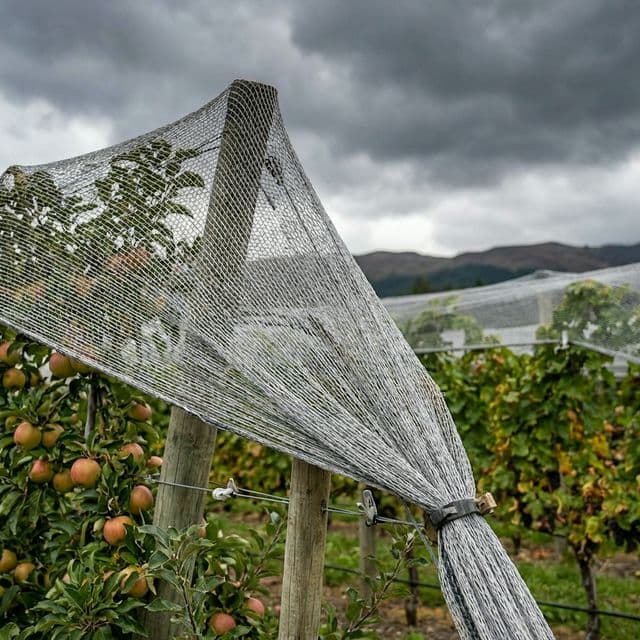
A five-minute hailstorm can entirely destroy a multi-million dollar high-yield fruit crop.
- The Action: For high-value crops (like vineyards or orchards), invest heavily in automated or quickly-deployable woven hail netting systems.
- The ROI: While the upfront capital expenditure is significant, securing the physical integrity of the crop against ice damage pays for itself during a single severe cell impact.
3. Dig Deep Agricultural Drainage Trenches
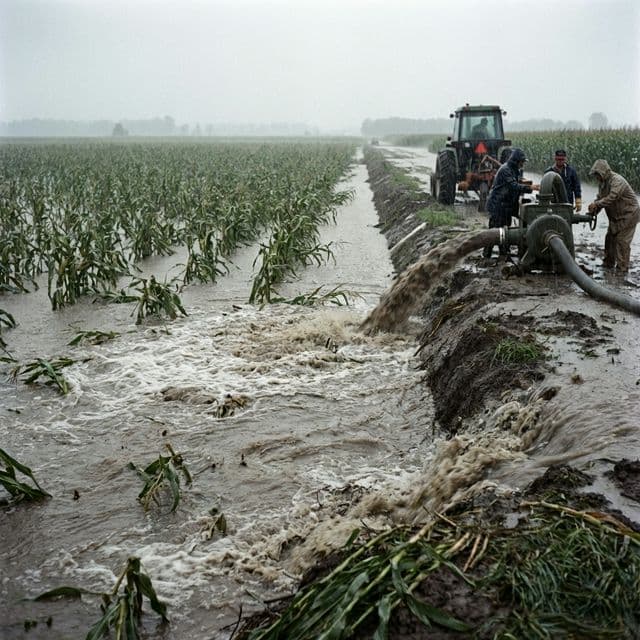
Standing floodwater "drowns" the root systems of most cash crops within 48 to 72 hours, completely ruining the harvest yield.
- The Action: Utilize heavy machinery to carve deep, calculated run-off trenches and swales strategically throughout the lowest points of the acreage.
- Pro-Tip: Connect these trenches to high-volume PTO-driven tractor water pumps to forcibly eject standing water into off-property municipal spillways.
4. Fortify Grain Silos with Tension Cables
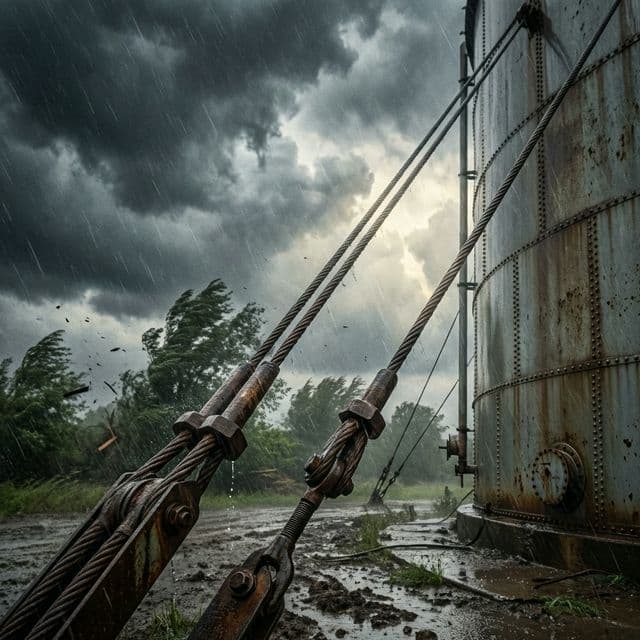
Empty or partially empty steel grain silos are essentially massive metal sails. They are incredibly prone to buckling or tipping over entirely during straight-line winds or tornadic activity.
- The Action: Anchor all tall, exposed structures using heavy-duty industrial steel tension cables secured to deeply buried concrete deadman anchors.
- Maintenance: Ensure these cables are inspected annually for rust or tension lagging.
5. Maintain Powerful Diesel Backup Generators
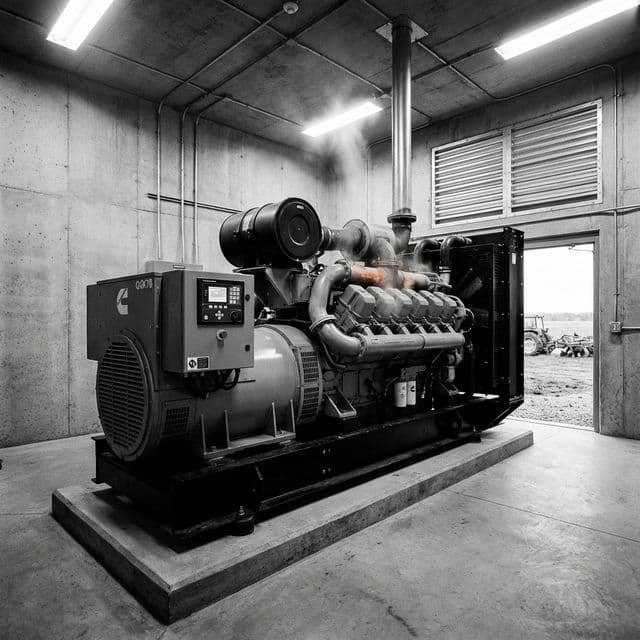
A massive storm will undoubtedly sever the municipal power grid, potentially for weeks in rural areas. Without power, automated feeding lines, milking parlors, and critical climate-control systems for poultry fail immediately.
- The Action: Install a massive, industrial-grade diesel backup generator securely housed in a dry, elevated concrete structure.
- The Supply: Ensure the farm has a securely buried, massive reserve tank of diesel fuel treated with stabilizers so the generator can run non-stop for at least 14 days without relying on disabled supply chains.
[!CAUTION] In agricultural zones, the severity of a storm can escalate from a mere thunderstorm watch to an EF4 tornado warning in under ten minutes. A high-decibel weather radio and instant, localized digital emergency alerts are absolutely mandatory for field workers to ensure human safety first and foremost.